Trends
2026 Wedding Ins and Outs
AltarHaus Editorial
The throughline of 2026 weddings is authenticity. Couples are shedding anything that feels performed or overproduced. Here is what is coming in, and what is finally on its way out.
Every year the wedding world shifts, and 2026 is arriving with something to say. The throughline this year is authenticity: couples are shedding anything that feels performed, overproduced, or designed for an audience rather than for themselves. What's coming in is quieter, more considered, and arguably more beautiful for it. Here's what we're watching.
OUT: Bachelorette trailer-feeling wedding videos
You know the ones. The drone shot over the venue. The slow-motion veil toss. The cinematic title card with the couple's names in script font. Wedding videography spent the last several years borrowing heavily from Netflix production aesthetics, and somewhere along the way, a lot of videos started looking more like trailers for movies about weddings than actual memories of a day. Couples are noticing.
IN: Content creation over traditional video
Something interesting is happening: couples are ditching traditional videography altogether and opting for a dedicated content creator at their wedding instead. Someone whose job is to capture the day the way you actually experience it, through your phone, in real time, in the formats you already live your life in. Short clips, candid moments, things that actually get watched and shared rather than sitting in a Vimeo folder for five years. The logic is hard to argue with. You're going to rewatch a 45-second clip of your first dance on Instagram a hundred times before you ever sit down to watch a 12-minute cinematic film. The way we consume memory has changed, and wedding documentation is finally catching up.
OUT: Overly edited photography
The heavily filtered, heavily retouched, heavily processed wedding photo has had a long run, and it's wrapping up. Gen Z especially has grown up watching authenticity get commodified on social media to the point where they can clock inauthenticity immediately and instinctively. They don't want their skin smoothed into porcelain. They don't want the colors graded into a preset mood. They want it to look like it actually looked.
IN: Raw, film-influenced photography
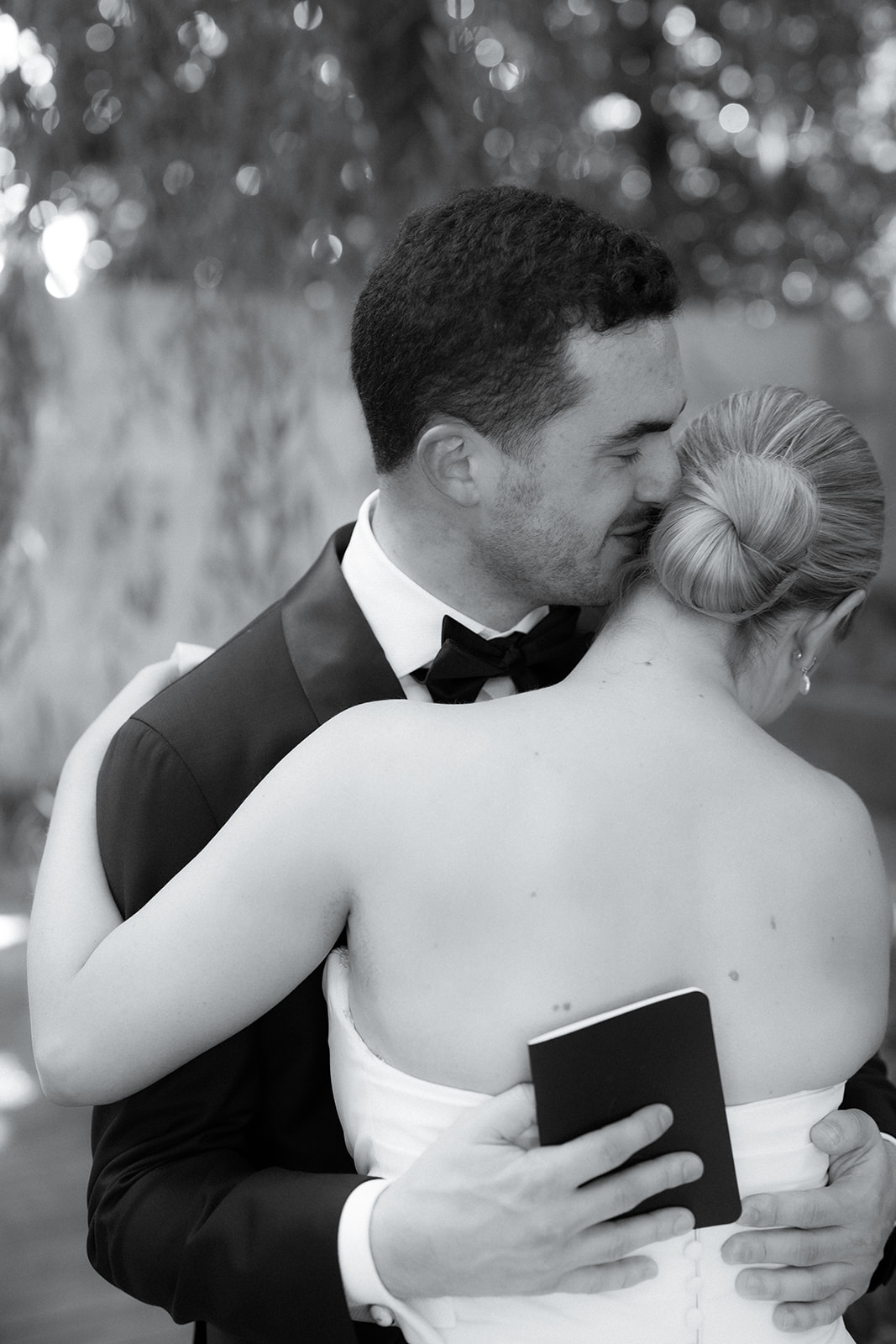
What's coming in is stripped down and quietly stunning. Think cooler tones, natural grain, real shadows. The photographers we're most excited about right now are shooting with an almost journalistic restraint: no heavy processing, no signature preset slapped over every frame, no airbrushing. The images look like they could have been taken in 1994 or 2026 and you genuinely couldn't tell. That timelessness is the whole point. Authenticity isn't a trend at this point. It's a correction.
OUT: The ball gown
The ball gown isn't going anywhere forever, but its reign as the default bridal silhouette is ending. The Cinderella moment, the cathedral-filling skirt, the sense that a bride must be transformed into something grander than herself to be a bride at all: that idea is losing its grip. Couples are pushing back against the version of weddings that requires you to perform a role rather than simply show up as yourself.
IN: Dresses that look like you
What's coming in is bridal fashion that amplifies rather than transforms. Brides want to walk down the aisle and have their partner think: that is exactly her. That means sculptural minimalism for some, draped and fluid for others, something vintage-inspired, something custom, something that has nothing to do with what a bride is "supposed" to look like and everything to do with who this particular woman actually is. The best bridal designers right now are asking their clients better questions: How do you dress when you feel most like yourself? The answers are producing dresses that are, frankly, more interesting than anything a ball gown silhouette could offer.
OUT: The generic venue
The hotel ballroom, the country club, the wedding-factory vineyard with the same ceremony lawn and the same string lights and the same floor plan as the last 400 weddings held there. Couples have seen enough of these on Instagram to last a lifetime, and more importantly, they've started to feel what's missing: any sense that the location was chosen because it means something.
IN: Venues with a reason
What's replacing it is intentionality. A family property, a restaurant the couple has been going to since their second date, a small inn in a town they love, a cultural institution that reflects who they actually are. The question isn't "does it photograph well." It's "why here." Couples who can answer that question with a real answer are throwing some of the most memorable weddings we've seen in years.
OUT: Maximalist florals
The towering centerpieces, the flower-draped everything, the installations designed to stop a scroll: they dominated the last decade of wedding aesthetics and they are quietly being set aside. Not because flowers aren't beautiful, but because at a certain scale, they stop feeling personal and start feeling like a production budget.
IN: Considered, garden-gathered florals
What's coming in leans loose, seasonal, and almost unconstructed. Arrangements that look like someone gathered them from a very beautiful garden rather than engineered them in a floral studio. Wildflowers mixed with something architectural. A single stem that earns its place. The restraint is intentional, and the effect is more romantic, not less.
OUT: The curated wedding hashtag and photo-op moment
The neon sign. The hashtag backdrop. The designated "Instagram moment" built into the venue tour. Weddings spent years designing for the feed, and the results started to feel hollow precisely because they were designed for the feed. Guests could feel the difference between a moment that happened and a moment that was staged to look like it happened.
IN: Experiences worth talking about
What couples want instead is something their guests will actually remember: a surprise performance, a midnight food moment nobody saw coming, a late-night activity that turns into a story people tell for years. The goal has shifted from "content worth posting" to "a night worth living." The beautiful irony is that the experiences worth living tend to produce the best content anyway.
AltarHaus Editorial