Planning Guide
How to Write Your Own Wedding Vows: A Guide for People Who Hate Writing
AltarHaus Editorial
Writing your own vows is one of the most meaningful things you can do on your wedding day — and one of the most terrifying. Here is how to actually do it.
Start With One Memory, Not a Declaration
The most common mistake people make when writing vows is opening with a grand statement of love. “You are my everything.” “I knew from the moment I met you.” These sentences are true and heartfelt, but they are also where the writing tends to stall — because a declaration that large is almost impossible to follow. Instead, start with one specific memory. The first time you realised you were in love. A moment that showed you exactly who this person is. A small, ordinary scene that would mean nothing to anyone else but everything to you. Specificity is what makes vows memorable.
Answer These Three Questions
If you are staring at a blank page, give yourself a structure to work within. Answer three questions: Who is this person to me? What am I promising them? What kind of life am I committing to build with them? You do not need to answer all three equally or in order — but having these anchors will stop you from either rambling or running dry. Most vows that feel complete and meaningful touch on all three, even briefly. Write your answers in whatever order feels natural, then shape them into something that sounds like you speaking aloud.
Write Like You Talk
The single most effective piece of advice for anyone who hates writing is this: do not write, transcribe. Record yourself talking about your partner for five minutes without stopping — voice memo, video, whatever is least self-conscious. Then listen back and find the sentences that sound most like you at your most honest. Those are your vows. The goal is not elegant prose; the goal is authenticity. Your partner fell in love with the way you actually speak, not with a version of you that has been edited for literary quality. Vows that sound like a real person are always more moving than vows that sound like a speech.
How Long Should They Be
One to two minutes when read aloud is the ideal length for wedding vows — which translates to roughly 150 to 250 words on the page. Long enough to feel substantial, short enough to hold attention and keep your voice steady. Resist the urge to include everything. You are not writing your partner’s biography or a complete account of your relationship; you are making a promise. The tightest, most focused vows are almost always the ones that land hardest. If your draft is running long, ask yourself which sentences are doing real work and which are decoration.
On the Question of Crying
You will probably cry. Your partner will probably cry. This is fine and expected and, in most cases, deeply appreciated by everyone present. The practical question is how to manage it. Reading slowly helps more than most people expect — when emotion rises, the instinct is to rush through it, but slowing down actually gives you more control. Practice reading your vows aloud multiple times before the wedding, ideally to another person, so the emotional peaks become familiar and slightly less overwhelming. Some people find it helpful to look up at their partner at the end of each sentence rather than keeping their eyes on the page throughout.
The Final Draft
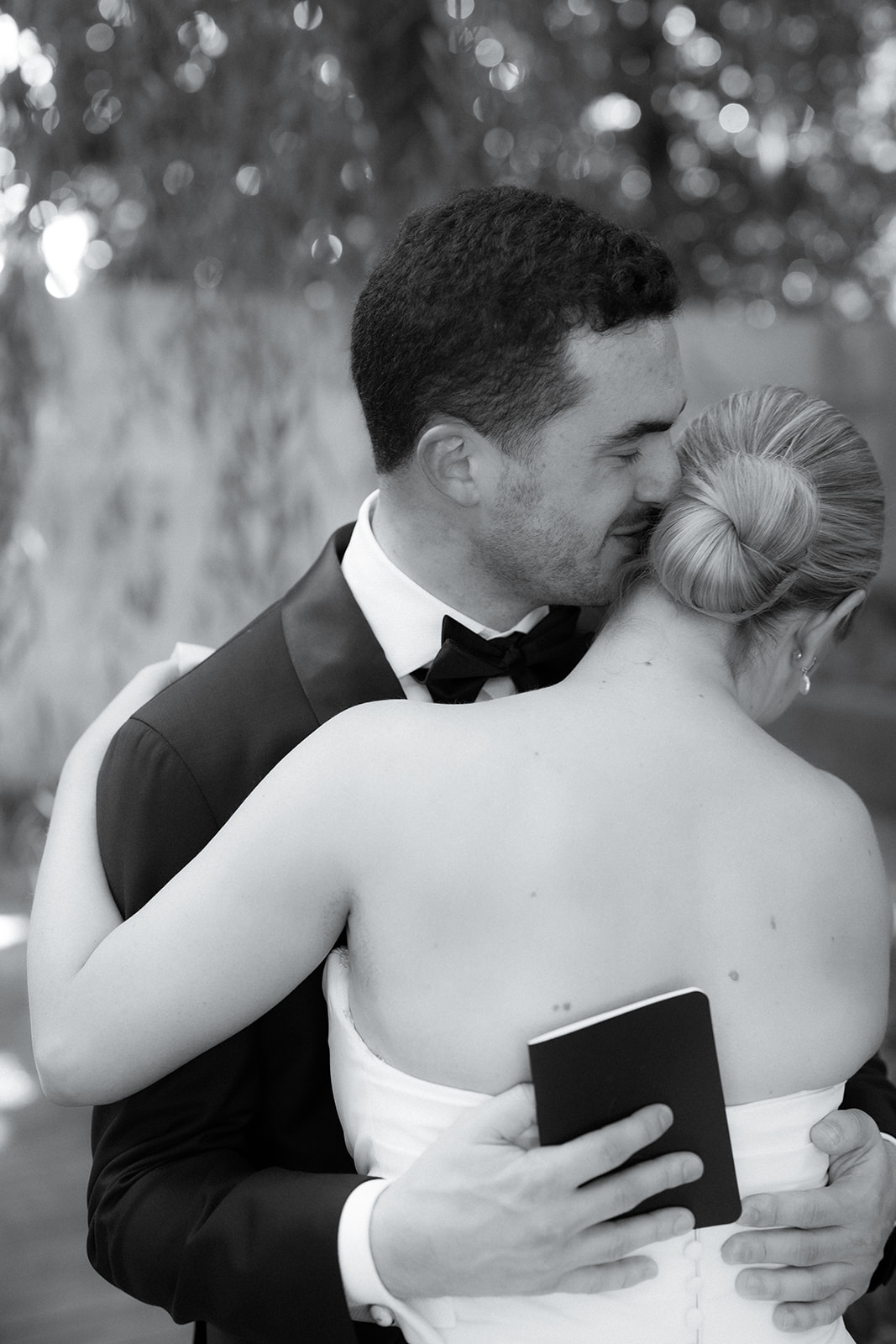
Once you have a draft you are mostly happy with, read it aloud three times on three different days. Each time, notice where it feels right and where something snags — a phrase that sounds clunky, a section that runs too long, a promise that does not quite capture what you mean. Make small adjustments. Then, about a week before the wedding, stop editing. Print or write out your final version in a format that is easy to hold and read in the moment. Trust what you have written. It does not have to be perfect. It has to be true.
AltarHaus Editorial